How to Choose Custom Size Wall Art for Any Space?

Time:2026-10-21 Author:Aria
0%

Choosing wall art is rarely as simple as finding an attractive image. The right piece must respect your wall’s width, ceiling height, furniture scale, lighting, and daily movement. Custom Size Wall Art makes this balance easier by allowing the artwork to fit the room instead of forcing the room to adapt. A narrow hallway may need a tall vertical print, while a wide sofa often benefits from a panoramic design. Small details matter. Measure twice.

This guide draws on practical display experience and careful design principles. Before ordering, record the usable wall area, frame depth, viewing distance, and nearby furniture dimensions. Consider natural light during the morning and evening. Glossy finishes can reflect windows, while matte surfaces usually remain calmer in bright rooms. Material quality also affects color accuracy, durability, and installation safety. Reliable suppliers should provide clear size options, material information, production samples, and dependable mounting guidance.

I once chose art by image alone. It looked impressive online but felt oversized above a modest console. That mistake taught me to judge proportion before emotion. Room photos, paper templates, and digital mockups can reveal problems early. Still, no method is perfect. Monitor colors vary, walls are rarely level, and personal taste can challenge standard design rules. The goal is not mathematical perfection. It is a considered fit that feels intentional, comfortable, and visually connected to the space.
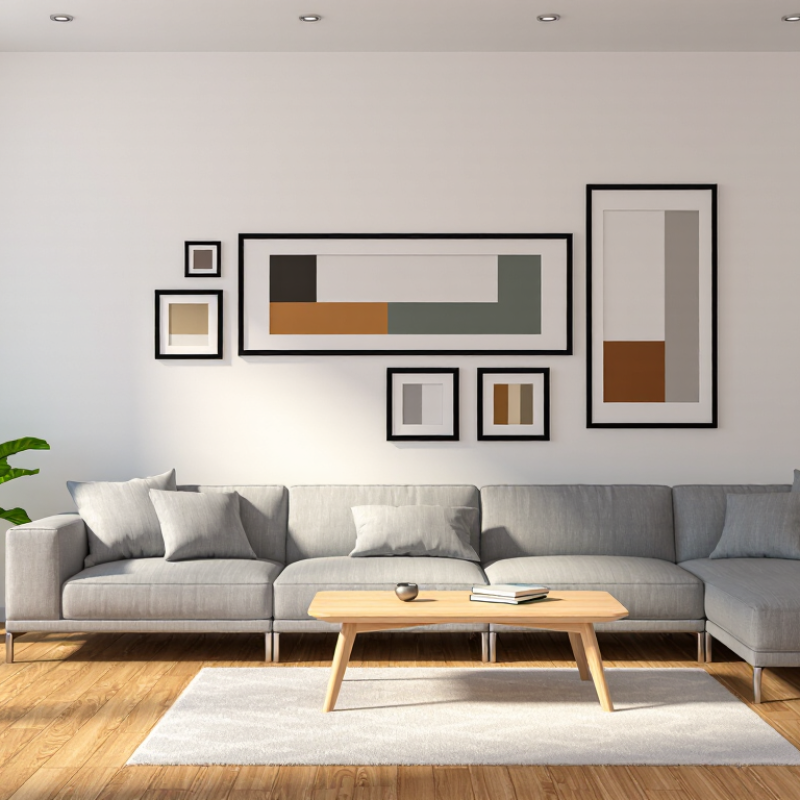
How to Choose Custom Size Wall Art for Any Space?

Define the Space, Purpose, and Visual Requirements

Choosing custom-size wall art starts with defining the space, not browsing images. Measure the wall width, ceiling height, furniture edges, and viewing distance. Leave breathing room around shelves, lamps, and door frames. Above a sofa, artwork often looks balanced at two-thirds to three-quarters of the sofa’s width. This is a guide, not a strict rule. My own installations taught me that small sizing errors feel surprisingly noticeable in narrow rooms. Paper templates can reveal awkward proportions before you place an order.

Clarify the artwork’s purpose. Should it create a calm focal point, add energy, or connect several furniture colors? A bedroom may benefit from soft shapes and muted tones. A hallway can handle stronger contrast because people view it briefly. Check visual requirements carefully. Confirm the needed orientation, image resolution, color balance, and finish. Large artwork can expose blurry details or uneven tones. Natural light may also change how colors appear throughout the day. I sometimes prefer a slightly quieter design than expected, although that choice can feel too cautious in a lively room.

Tips: Photograph the wall from several angles. Mark the intended size with removable tape. View it from the room’s usual sitting and standing positions. Consider glare near windows and strong shadows beside lamps. If the image contains fine details, ask a qualified print professional whether the file suits the final dimensions. Do not trust screen color completely. It can mislead you.

Measure Wall Dimensions and Determine the Ideal Artwork Scale

How to Choose Custom Size Wall Art for Any Space?

Measure Wall Dimensions and Determine the Ideal Artwork Scale

Choosing custom size wall art begins with accurate measurements, not guesswork. Measure the wall’s width and height, then note doors, windows, light switches, and nearby furniture. These details often change the best artwork proportions.

For artwork above a sofa or console, aim for a total width of about two-thirds to three-quarters of the furniture below it. Leave 6 to 8 inches between the furniture and the artwork’s lower edge. The center of the piece usually looks balanced at eye level, around 57 to 60 inches from the floor. However, rooms with tall ceilings may need a slightly higher placement.

For a narrow wall, a vertical design can add height without overwhelming the space. A wide wall may suit one horizontal piece or several panels arranged as one visual group. Measure the full group, including gaps between panels. Leave breathing room. Crowded art feels smaller than it is.

In my measuring experience, people often underestimate empty wall space. I once selected a piece that matched the sofa but ignored a nearby doorway. The result felt cramped. Recheck the viewing distance, too. Artwork should remain clear from the main seating area, not only look correct from one corner. Pencil marks and paper templates can reveal mistakes before you order. Measure twice. Adjusting a paper outline is easier than correcting custom artwork.

How to Choose Custom Size Wall Art for Any Space?

Measure the usable wall width and select artwork approximately two-thirds of that width. This scale creates balanced visual coverage while leaving comfortable margins around the piece.

Example: for a 108-inch wall, an artwork width of about 72 inches provides a balanced proportion. Measurements represent usable wall space after excluding doors, windows, and major furniture.

Choose Materials, Formats, and Customization Options

Choosing custom size wall art begins with the space, not the picture. Measure the wall, nearby furniture, and viewing distance before selecting a format. A narrow vertical print can balance a tall hallway, while a wide canvas suits a low sofa. Leave breathing room around the artwork. Crowded walls feel restless.

Material changes both appearance and durability. Canvas adds gentle texture and reduces glare near windows. Fine-art paper offers sharper details, but it needs protective framing and suitable glass. Metal or acrylic surfaces create a cleaner, brighter effect. They can also reveal fingerprints and harsh reflections. In humid rooms, choose sealed surfaces and stable backing. Ask about fade resistance, color accuracy, and hanging hardware before ordering. These details affect long-term performance.

Customization can include exact dimensions, crop position, border width, frame color, and orientation. Upload a high-resolution image, preferably from the original file. A small image may look acceptable on a phone but disappoint when enlarged. I once chose a dramatic crop without checking the furniture below it. The composition felt awkward. Check a digital mockup first. It helps, though it is not perfect. Colors may vary between screens and printed materials. For dependable results, request a proof when available and compare it with the room’s natural light. Personal details should support the space, not overpower it.

How to Choose Custom Size Wall Art for Any Space? - Choose Materials, Formats, and Customization Options

Space Type Recommended Format Common Custom Sizes Suitable Materials Customization Options Selection Guidance
Living Room Sofa Wall Landscape or triptych 48 × 24 in; 60 × 30 in; 72 × 36 in Canvas, framed paper print, aluminum Exact width, frame color, border depth, image crop Choose artwork approximately two-thirds to three-quarters of the sofa width for visual balance.
Dining Area Horizontal statement piece or coordinated pair 36 × 24 in; 48 × 24 in; 60 × 30 in Metal print, acrylic, sealed wood panel Surface finish, protective coating, mounting style Select wipe-clean surfaces when the artwork will be placed near food, moisture, or frequent activity.
Bedroom Wide landscape or two-piece set 40 × 20 in; 48 × 24 in; 60 × 30 in Canvas, textile print, matte paper print Muted color palette, matte finish, frame depth Use low-glare finishes and calming tones to support a softer, less reflective atmosphere.
Entryway or Narrow Hallway Portrait, slim vertical panel, or gallery grouping 12 × 24 in; 16 × 32 in; 20 × 40 in Framed print, lightweight canvas, wood panel Slim frame, hanging orientation, multi-panel spacing Measure the clear wall width and leave enough passage space around the artwork.
Home Office Portrait, landscape, or modular grid 24 × 18 in; 36 × 24 in; 48 × 32 in Canvas, matte paper, aluminum Orientation, color adjustment, text or map additions Avoid highly reflective finishes if the wall is opposite a monitor or receives direct window light.
Staircase Wall Vertical series or ascending gallery arrangement 12 × 16 in; 16 × 20 in; 18 × 24 in per piece Framed paper, canvas, lightweight composite Set quantity, spacing, frame consistency, layout preview Create a paper template first to test alignment along the staircase slope.
Bathroom or Humid Area Small horizontal or vertical panel 12 × 18 in; 16 × 24 in; 24 × 36 in Acrylic, aluminum, sealed synthetic panel Water-resistant finish, edge treatment, concealed mounting Keep the artwork away from direct splash zones and confirm that the backing is moisture resistant.
Large Open Wall Oversized single piece or multi-panel composition 72 × 36 in; 84 × 42 in; 96 × 48 in Canvas, aluminum, acrylic, framed print Panel count, seam placement, frame thickness, image extension Check delivery access, wall structure, and hanging hardware before ordering oversized art.
Key Measurement Checklist: Record the usable wall width and height, note furniture dimensions, account for frame thickness, confirm viewing distance, and leave a comfortable visual margin around the artwork.

Match Colors, Themes, and Styles to the Existing Interior

Custom-size wall art should respond to the room, not compete with it. Start by photographing the existing interior in daylight. Note the dominant wall color, sofa fabric, wood tone, and metal finishes. A useful proportion is artwork covering about two-thirds of the furniture width beneath it. For a 180-centimeter sofa, try a piece near 120 centimeters wide. This creates balance without making the wall feel crowded.

Color matching does not mean copying every shade. Choose one quiet background tone from the room, then add one stronger accent from a cushion, rug, or ceramic object. For themes, repeat the room’s visual language: botanical forms suit natural materials, while geometric art supports clean-lined furniture. The National Association of Realtors’ 2023 Profile of Home Staging found that 83% of buyers’ agents said staging helped buyers imagine a property as their future home. Thoughtful art can support that emotional connection. The Art Basel and UBS Global Art Market Report 2024 valued global art sales at approximately $65 billion in 2023, showing continued interest in visual storytelling, including personal spaces.

Tips: Test paper mock-ups first. View them from the doorway and sofa. Leave at least 15 centimeters above furniture when possible. Your first choice may still feel wrong. A perfect color match can look strangely sterile, so allow one deliberate contrast. Before ordering, check the frame depth, lighting, and viewing distance. A small room may need a calm oversized piece, while several small works can create unnecessary visual noise.

Review Layout, Installation Needs, and Final Artwork Specifications

How to Choose Custom Size Wall Art for Any Space?

A successful custom wall artwork begins with the room, not the image. Measure the wall width, furniture height, door swing, and nearby lighting. The 2024 Houzz & Home Study surveyed more than 6,000 homeowners about renovation decisions. Its findings reinforce a practical truth: homeowners increasingly personalize spaces rather than follow one fixed style. Leave 6 to 10 inches between furniture and artwork when possible. Above a sofa, the artwork often looks balanced at two-thirds of the sofa’s width. Still, this rule is not absolute.

Installation needs can change the final size. Record the wall material, stud locations, ceiling height, and available mounting clearance. A heavy framed piece may require two fixing points or professional installation. In humid rooms, specify moisture-resistant materials and sealed edges. I have seen beautiful artwork fail because the frame touched a damp wall. That mistake is expensive.

Review the layout with paper templates before production. Mark the outer frame, not only the image area. Check sightlines from seating, entrances, and standing positions. The American Society of Interior Designers’ 2024 Trends Outlook highlights adaptable, personalized residential environments. This supports choosing artwork that fits daily movement, not just a photograph. Confirm final specifications in writing: finished width, height, depth, bleed, orientation, frame color, hanging hardware, and color profile. A small color shift can appear strongly beside warm lighting. Leave room for correction. Erotiske

FAQS

How should I measure a wall before ordering custom artwork?

Measure the wall’s width and height. Note doors, windows, switches, and nearby furniture. Measure twice.

What artwork width works above a sofa or console?

Choose artwork about two-thirds to three-quarters of the furniture’s width. A 180-centimeter sofa may suit a 120-centimeter piece.

How much space should remain between furniture and artwork?

Leave about 15 to 20 centimeters between the furniture and the artwork’s lower edge. Crowded art feels smaller.

Where should wall artwork be placed vertically?

Keep the artwork’s center near eye level, around 145 to 152 centimeters from the floor. Tall ceilings may require slightly higher placement.

Which artwork format suits a narrow or wide wall?

Use vertical artwork on narrow walls to add height. Wide walls may suit one horizontal piece or grouped panels.

How can I test artwork size before ordering?

Cut a paper outline and attach it to the wall. View it from the sofa and doorway. It may expose awkward proportions.

Which material is suitable for different rooms?

Canvas reduces glare and adds texture. Paper offers sharp detail but needs protective framing. Sealed surfaces work better in humid rooms.

What should I check when customizing an artwork?

Confirm exact dimensions, crop position, border width, frame color, and orientation. Upload the original high-resolution file whenever possible.

How can artwork match an existing interior without looking dull?

Repeat one quiet room color and add one stronger accent. Do not copy every shade. A deliberate contrast may work better.

Why should I request a proof or digital mockup?

Screens can show different colors from printed materials. A mockup helps, but it is not perfect. Natural light can change the result.

Conclusion

Choosing Custom Size Wall Art begins with understanding the space, its purpose, and the visual impact you want to create. Consider whether the artwork will serve as a focal point, complement existing décor, or add personality to an otherwise empty wall. Carefully measure the wall, furniture, and surrounding features to determine the most balanced artwork scale. Proper proportions can make a room feel more organized, spacious, and visually appealing.

Next, explore suitable materials, formats, and customization options, such as framed pieces, panels, or multi-part arrangements. Select colors, themes, and artistic styles that coordinate with the interior without making the space feel crowded. Before finalizing your order, review the layout, mounting method, lighting conditions, and exact artwork specifications. A thoughtful planning process ensures that the finished piece fits securely, reflects your design preferences, and enhances the overall atmosphere of any room.


Aria

Aria

Aria is a dedicated marketing professional with a deep passion for innovative strategies and a keen understanding of our company's product offerings. With a wealth of experience in the industry, Aria excels at crafting engaging content that highlights the unique features and benefits of our......